
If you are planning a trip to Marsa Alam and want to experience more than a traditional Red Sea beach holiday, Wadi El Gemal National Park is one of the most interesting places to include in your plans. Located south of Marsa Alam along Egypt’s Red Sea coast, the protected area brings together desert mountains, valleys, mangrove forests, seagrass beds, coral reefs, islands and important wildlife habitats.
The area is also significant for its cultural and historical heritage. Ancient mining sites, archaeological remains and traditional communities add another dimension to the landscape, making a visit about more than swimming and sightseeing.
For travelers, the main question is often how to experience the park without spending too much time on the road. Where should you stay? How do you reach the protected area? Which attractions can be combined in one day? And what should you know before visiting?
Wadi El Gemal National Park is a protected land and marine area in Egypt’s Red Sea Governorate, south of Marsa Alam. It was officially declared a national park in 2003 to protect the area’s ecological and cultural importance.
According to Egypt’s official tourism authority, the protected area includes coastal desert, mountains, valleys, mangroves, seagrass beds, coral reefs and the Hamata archipelago. The area is also known for its marine biodiversity and historic sites.
This variety is what makes the park different from a conventional beach destination. A single trip can combine:
For visitors staying in southern Marsa Alam, the park can therefore become a major part of the holiday rather than simply a day-trip attraction.
The strongest reason to visit is the concentration of different natural environments in one protected region.
The Red Sea coastline provides coral reefs and marine habitats, while the landward side transitions into desert valleys and mountains. Between these environments are mangroves and seagrass areas that support important species.
The park is also associated with attractions such as Sharm El Luli, Ras Baghdadi and Ras Hankorab, while archaeological and mining remains provide an insight into the area’s past.
Depending on your itinerary and the areas accessible during your visit, experiences can include:
The important point is that Wadi El Gemal is not one attraction with one activity. It is a large protected landscape, so your experience will depend on which parts you visit and how you organize your transportation.
For many visitors, the marine ecosystem is the highlight of Wadi El Gemal.
The protected waters contain coral reefs, seagrass meadows and other habitats that support a wide range of marine species. The official Egyptian tourism authority specifically highlights the area’s coral reefs, seagrass habitats and dugong population.
Snorkeling is accessible to many travelers because several reef areas can be reached from the coast. Diving provides opportunities to explore deeper reef environments and observe marine life from a different perspective.
Wildlife sightings naturally vary, but the protected area is associated with:
A sighting should never be treated as guaranteed. Marine animals move freely through their habitats, and responsible visitors should observe them without touching, feeding or chasing them.
Coral reefs receive much of the attention along the Red Sea, but mangroves and seagrass beds are equally important to the coastal ecosystem.
Mangroves help create sheltered environments for marine organisms and contribute to the stability of coastal areas. Seagrass meadows provide feeding grounds for species such as dugongs and sea turtles.
This is one reason Wadi El Gemal is valuable as a protected area. Its different ecosystems are connected rather than existing as isolated attractions.
For visitors, this means a beach excursion can also become an opportunity to understand how desert, coastal and marine environments interact.
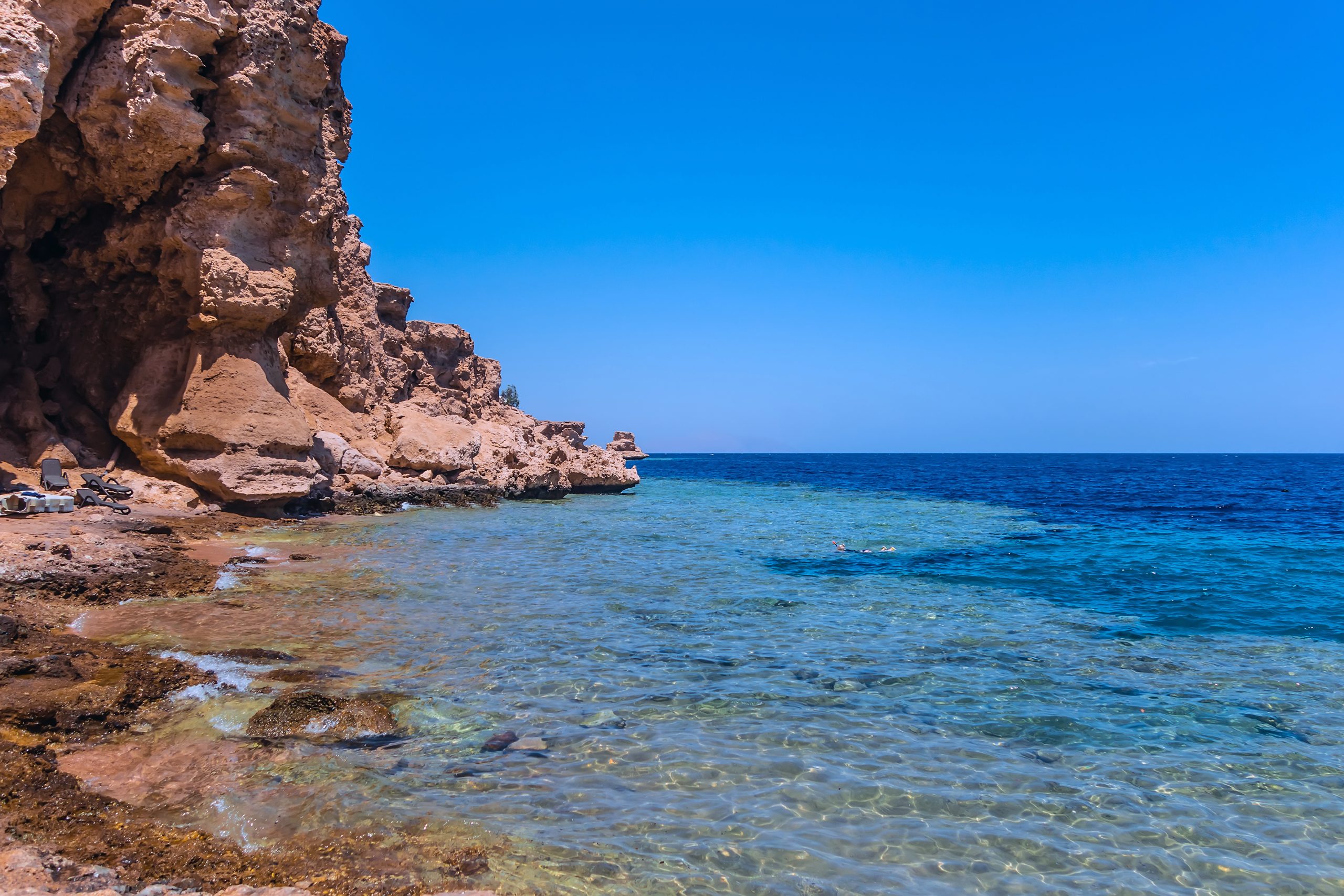
Sharm El Luli is one of the best-known beaches in the Wadi El Gemal area.
The attraction is known for its light-colored sand, clear turquoise water and relatively natural surroundings. Egypt’s official tourism authority identifies Sharm El Luli as one of the notable coastal sites within the Wadi El Gemal–Hamata protected area.
The beach is particularly appealing to travelers who want a scenic Red Sea experience away from heavily built-up coastal areas.
Because it is part of a protected environment, visitors should follow local instructions regarding access, swimming, waste disposal and activities.
El Qulaan is another interesting place for travelers who want to see the coastal environment beyond a conventional sandy beach.
The mangrove setting creates a distinctive contrast between shallow water, vegetation and the surrounding desert. It is particularly attractive for photography and nature observation.
When visiting mangrove environments, avoid walking through sensitive vegetation or disturbing wildlife. A landscape that looks simple on the surface can support a complex ecosystem underneath.
The Hamata archipelago forms another important part of the protected coastal environment.
Boat excursions to the islands can provide access to coral reefs, clear water and marine habitats that are difficult to experience from the mainland. Depending on sea conditions and the excursion, activities may include snorkeling, swimming and reef exploration.
Boat trips should always be planned around weather and sea conditions. Operators may change routes or schedules when conditions are unsuitable, so flexibility is useful when arranging your itinerary.
Wadi El Gemal is not only about the sea.
Moving inland reveals a very different landscape of desert valleys, mountains and rocky terrain. These environments provide a sharp contrast with the blue waters of the Red Sea and are particularly interesting for travelers who want to experience the geographical diversity of southern Egypt.
Guided desert excursions may include:
For remote desert excursions, an organized trip with an experienced local guide is preferable to independent exploration. Navigation, heat, limited mobile coverage and changing road conditions can make the desert more challenging than it appears.
The region surrounding Wadi El Gemal also has a long history of mineral extraction.
Ancient mining activity, particularly the search for emeralds and gold, forms an important part of the area’s heritage. Archaeological remains associated with historic mining settlements can still be found in parts of the protected landscape.
Sikait, also known as part of the ancient Mons Smaragdus area, is particularly associated with ancient emerald mining.
This history adds an important cultural layer to a Marsa Alam itinerary. Visitors interested in Egypt’s past can experience a side of the country that is very different from the better-known temples and monuments along the Nile.
Access to archaeological locations may be subject to local regulations, so organized excursions are recommended.
The diversity of habitats supports a wide range of wildlife.
The marine environment provides feeding and breeding areas for numerous species, while the desert supports animals adapted to arid conditions. Birdlife is also an important part of the protected area’s biodiversity.
One of the most notable marine species associated with the region is the dugong. These marine mammals depend heavily on seagrass habitats, making the conservation of seagrass areas particularly important.
Visitors may also encounter sea turtles while snorkeling or diving. However, wildlife should always be viewed from an appropriate distance.
If you encounter an animal during your visit:
Responsible behavior is especially important in protected marine and coastal environments.
Transportation is one of the practical considerations travelers should understand before planning a visit.
Wadi El Gemal is located south of Marsa Alam and is primarily accessed by road. Depending on your starting point and itinerary, transportation can include private transfers, taxis, organized excursions or resort-arranged transportation.
No. Marsa Alam does not have a metro or underground rail network, so metro access is not an option for reaching Wadi El Gemal National Park.
Travelers should instead plan around road transportation.
The most practical options are:
Transport option | Best suited for |
Private transfer | Travelers prioritizing convenience and a fixed itinerary |
Taxi | Shorter local journeys and flexible travel |
Organized excursion | Visitors combining several attractions |
Resort-arranged transfer | Travelers staying at nearby accommodation |
Rental vehicle | Experienced travelers comfortable with longer-distance driving |
For first-time visitors, an organized excursion or pre-arranged transfer is generally simpler than trying to coordinate several separate journeys.
Egypt’s tourism guidance also notes that taxis and other local services may operate on a cash basis, so carrying suitable Egyptian currency can be useful when traveling independently.
The exact travel time depends on where you are staying and which part of the protected area you are visiting.
The park stretches across a large region, so there is no single “entrance” that represents every attraction. Some locations are relatively close to the southern Marsa Alam resort area, while others require a longer road journey.
This is an important planning point: do not judge the entire park by the distance to one attraction.
Before booking an excursion, check:
A well-planned itinerary can prevent unnecessary travel and allow more time at the attractions themselves.
Start by deciding what you want most from the visit.
For example:
Marine-focused trip:
Choose snorkeling, diving, reefs and coastal sites.
Nature-focused trip:
Prioritize mangroves, seagrass areas, wildlife and birdwatching.
Adventure-focused trip:
Look at desert safaris, mountain landscapes and boat excursions.
History-focused trip:
Consider archaeological and ancient mining locations.
Trying to cover every category in one day can result in spending more time in transportation than at the attractions.
Wadi El Gemal is a year-round destination, but the ideal conditions depend on your activities.
The cooler period from approximately October to April is generally more comfortable for desert excursions, sightseeing and longer outdoor activities.
The warmer months can still be attractive for marine activities, but midday heat should be taken seriously when planning land-based excursions.
Do not leave long-distance transportation until the last minute.
Confirm:
This is particularly important if you are staying outside the immediate protected area.
A day around the protected area can involve considerable sun exposure.
Useful items include:
For desert excursions, additional requirements may apply depending on the operator.
For travelers planning several nature and marine activities, staying closer to the protected area can reduce road travel and make the itinerary easier to manage.
One accommodation option located within the protected area is Shams Alam. The property describes itself as a resort in Wadi El Gemal National Park, with direct access to the Red Sea and the surrounding natural environment. This location can be particularly relevant for visitors whose priority is spending more time around the park rather than traveling long distances from northern Marsa Alam.
When comparing the best resorts in Marsa Alam Egypt, location should therefore be considered alongside facilities and price. A property closer to the attractions you plan to visit can make a noticeable difference to the amount of time spent traveling.
Wadi El Gemal is a protected natural area rather than a conventional entertainment district. That means visitors should plan with the environment and local conditions in mind.
You will not find the same level of commercial development at every location that you might find in a major resort town.
Some areas are intentionally maintained in a more natural state.
Certain archaeological or protected locations may have specific access requirements. Confirm the current situation with your tour operator or local authorities before setting out.
Never stand on coral, collect coral fragments or shells, or touch marine animals.
Even small physical damage to coral can take a long time to recover.
Parts of the protected area are connected to the traditional lands and heritage of local Bedouin communities.
Follow local guidance, ask before photographing people and purchase locally made products or services through appropriate channels where available.
The value of Wadi El Gemal comes from the fact that its landscapes remain relatively natural.
Tourism can support local economies and increase awareness of conservation, but increased visitation also creates pressure on fragile environments.
Visitors can help reduce this pressure by:
These actions are simple, but they matter when applied across thousands of visitors.
There is no single answer because it depends on your priorities.
A day trip works well if you want to see one major attraction or join a specific snorkeling, beach or desert excursion.
A longer stay is more suitable if you want to combine several experiences without spending most of your time traveling.
For example, a multi-day itinerary could combine:
Day 1: Red Sea beach and snorkeling
Day 2: Wadi El Gemal nature and coastal attractions
Day 3: Desert or archaeological excursion
Day 4: Hamata-area marine experience
This approach allows you to experience different sides of the region instead of trying to compress everything into one long day.
Wadi El Gemal National Park offers one of the most varied natural experiences available around Marsa Alam. Its appeal comes from the connection between the Red Sea and the Eastern Desert: coral reefs and seagrass habitats meet mangroves, beaches, valleys and mountains, while archaeological sites reveal the area’s long human history.
Planning is important because the protected area covers a large region and its attractions are not all located in one place. There is no metro network serving the area, so travelers should arrange road transportation in advance and check the exact location, travel time and access requirements for each excursion.
For those who want to spend more time close to the protected landscape, accommodation within the park can reduce unnecessary travel. The official Resort in Wadi El Gemal National Park page provides further information about staying within the protected area.
Whether your priority is snorkeling, wildlife, desert scenery, cultural heritage or simply experiencing a quieter section of Egypt’s Red Sea coast, Wadi El Gemal is best approached as a protected ecosystem rather than just another tourist attraction. Respecting that environment is what helps preserve the experience for future visitors.
Wadi El Gemal National Park is located south of Marsa Alam in Egypt's Red Sea Governorate. The protected area extends across desert, coastal and marine environments.
It is known for coral reefs, mangroves, seagrass beds, desert landscapes, marine wildlife, beaches, islands and ancient mining and archaeological heritage.
Yes. Many dive sites feature calm conditions suitable for beginners, and local dive centres offer introductory dives and certification courses for those new to scuba diving.
No. Marsa Alam does not have a metro system. Wadi El Gemal is primarily reached by road using private transfers, taxis, organized tours or other road transportation.
A single day can work for a focused excursion, but two or more days can provide a more relaxed opportunity to combine marine, desert and cultural experiences.
Visitors should follow local instructions, avoid damaging coral or vegetation, keep away from wildlife, take their waste with them and respect local communities and archaeological areas.
Yes, provided activities are selected according to the age and abilities of the travelers. Families should consider travel times, heat exposure, swimming ability and the physical demands of each excursion.
Yes. Sharm El Luli is one of the notable coastal sites associated with the Wadi El Gemal–Hamata protected area.
Unlock special winter offers available only when you book directly with us.
We respect your privacy. Your details will only be used to send the offer and booking link. No spam – unsubscribe anytime.
BEST RATES GUARANTEED